
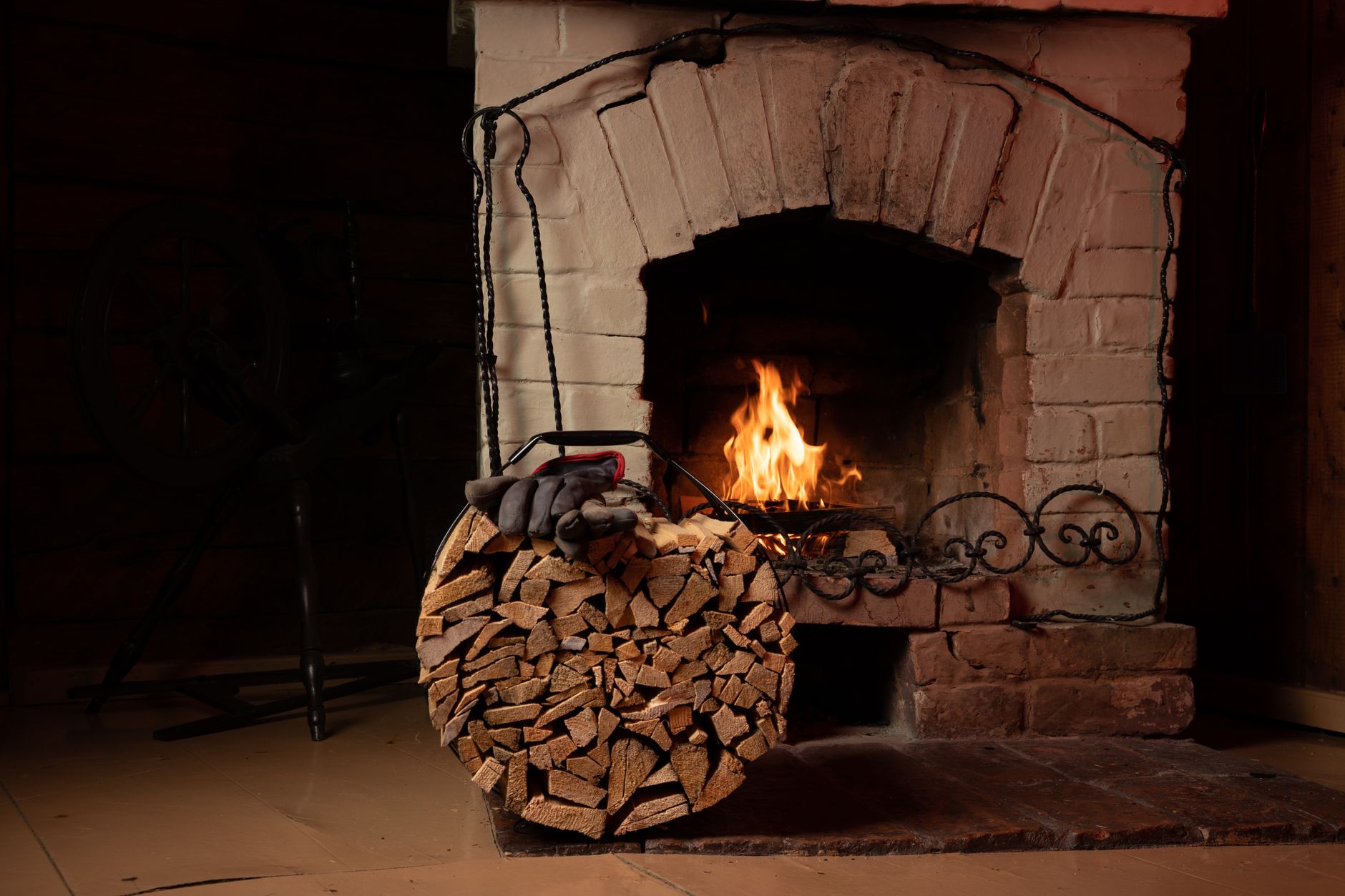
Keep Embers Out of Your Los Angeles Chimney
From spark arrestor caps to liners, crowns and gas units.
Caps, sweeps and inspections come first because they keep sparks in and embers out. The rest covers the masonry, fireboxes, stoves and gas work that follow. Open a card for the details.
Chimney Sweep
Rods and a sealed vacuum strip the tar from the flue before wind season, with the cap screen looked at on the way out.
Chimney Inspection
Firebox to cap looked over for the gaps a spark could use, with any reason to go deeper spelled out plainly.
Chimney Repair
Splits, gaps and slipped metal closed up, written line by line with the fire-season items at the top.
Fireplace Inspection
Hearth depth, trim distances, firebrick and damper looked at from the room, where stray sparks come to rest.
Fireplace Repair
Firebrick, joints, panels, hearths and screens put right, with fire-risk items at the head of the sheet.
Chimney Level 2 Inspection
A recorded camera pass from firebox to cap plus an attic look, for sales, flue fires, hard shaking or a fuel change.
Chimney Cap Installation
Spark arrestor caps in stainless or copper, measured to the crown and fastened against Santa Ana gusts.
Chimney Flashing Repair
A staged hose test finds the entry, then sealant, new counter pieces or a full metal set, each priced.
Chimney Masonry Repair
Washed-out joints repacked and flaked faces replaced, side by side, in a mix softer than the brick.
Chimney Rebuilds
Loose or leaning brick taken off and relaid with a new crown and flashing, with removal priced as another route.
Fireplace Cleaning
Firebox, grate, doors and surround cleaned, with old ash carried off in metal rather than left by the house.
Gas Fireplace Cleaning
Ports, pilot and logs cleaned after the idle months, then a carbon monoxide reading before we go.
Gas Fireplace Repair
Pilot, valve, igniter and switch metered one at a time, then a burn and a carbon monoxide reading.
Fireplace Remodel
A new face, a new hearth or a fuel change, with trim and mantel set clear of the heat.
Fireplace Inserts
A glass-fronted gas or wood unit in the old opening, with liner and gas line priced on their own lines.
Pellet Stove Repair
Code read, each part metered and the exhaust path cleaned when ash is what tripped the stove.
Wood Stove Repair
Rope seals, firebrick, baffle and pipe set right, with fire-risk items marked apart from efficiency items.
Gas Logs
Wood fires retired for gas logs, with burner, valve and line written out and the flue swept first.
Chimney Seismic Retrofit
Bracing, strapping or a lighter top for brick chimneys, laid out as options with the state of the brick in view.
Chimney Crown Repair
Crowns coated, patched or poured fresh, with the cap set back on a firm base before wind season.
Dryer Vent Cleaning
The duct cleared from machine to hood, the outdoor flap freed and plastic sections flagged.
Chimney Liner Installation
A stainless liner lowered full height and sealed under a cap, closing the cracks heat and sparks could use.
Chimney Leak Repair
Water traced in stages to the entry point, then closed off, with the figure set by what the source turns out to be.
Chimney Waterproofing
A breathable repellent brushed on after repairs, so rain beads off and trapped damp can still leave.
Chimney Damper Repair
Seized handles freed, bent plates replaced or a top-mounted sealing damper fitted with its own mesh.
Chimney Chase Cover
A rusted chase top swapped for a fitted cover, with the screened cap refitted over the pipe.
Visits that somebody else asked for
A condo changing hands, a home inspector's flag, an estate with many hearths, or camera frames showing broken tile: each page below takes one of those calls.
Condo and townhouse sales
Selling or buying a condo with a fireplace: whose flue it is, what the association controls and what the unit owner can fix.
For real estate agents
When the home inspection says to call a chimney specialist: what our Level 2 adds and how the findings reach your file.
Large homes and estates
For houses with several fireplaces: one visit, room by room, priced per fireplace, with every cap on the roof looked at.
Flue repairs to code
What the camera shows inside a failed flue, the usual fixes from sealed tile to a full liner, and the prices we publish.
Based in Los Angeles, with Alhambra, Maywood and Temple City close by.
Every city below has its own page with notes on housing, weather and what we tend to find on its roofs.
Our Base
Los Angeles
Hub city
Alhambra
Focus city
Temple City
Focus city
Open a city to read about its housing and the chimney problems we see most there before fire season.
Los Angeles
Harbor to the north Valley, our home ground
January 2025 brought the Palisades Fire and thousands of structures gone, proof that wind-carried embers reach any open flue. November to March rain soaks crowns, and the Puente Hills thrust beneath downtown can crack mortar.
Alhambra
Old streetcar suburb bounded by the 10 and the 710 stub
A loose cap can be torn off by Santa Ana gusts in fall and winter, leaving the flue open to blown embers. Alert days under Rule 445 stop wood fires through the winter, and chimneys here felt Chino Hills and La Habra.
Maywood
Riverfront Park city, one of the county's densest
No major wildfire is on record inside city limits, yet sun and winter wet still wear crowns and mortar, opening gaps for embers. Two quakes, Long Beach 1933 and Whittier Narrows 1987, both rattled this ground.
Temple City
Ranch house city in the San Gabriel Valley, incorporated 1960
Hot, dry inland summers and cool winter nights make crowns swell and shrink, and dry fall and winter gusts can carry embers or rattle a cap. Sierra Madre's 1991 quake was felt strongly in this city too.
Further Afield
136 more cities we cover
The full list runs well past the four focus cities.
Embers, flues and the fire calendar
What Los Angeles homeowners ask before the windy months.
When in the year should the chimney be swept?
Late summer, ahead of the autumn Santa Ana winds. A flue cleaned in August or September goes into the windy months with less tar for a spark to catch on, and the cap screen gets looked at on the same trip. Households that burn often through winter can add a spring visit.
What does the spark arrestor on a cap actually do?
It is the wire mesh around the sides of the cap. Burning flakes that rise from a fire hit the mesh and burn out before they can drift onto a roof, a fence or dry brush. A screen packed with soot chokes the draft, so we clean or swap it whenever we are up top.
What does a new chimney cap cost?
Installed caps are quoted after we measure. A single flue with a tile we can clamp to is the simplest job; a wide crown with several flues, or copper, sits the biggest. We measure first and give you the figure before anything is ordered.
Which inspection level should we book?
Level 1, at $52, suits a chimney in regular use with nothing changed. Level 2, at $375, adds recorded video of the flue and an attic check; choose it for a sale, after a flue fire or hard shaking, or when the fuel changes. Under NFPA 211, Level 3 is kept for faults that can only be reached by removing material.
Is a cracked crown a fire risk or only a water problem?
Water first. Rain gets into the brick, the mortar softens, and over a few winters the joints open. Open joints near the top let heat and sparks out, and a loose crown can no longer hold a cap firmly in strong wind. That is why crowns get fixed before new caps go on.
Should we light a fire on a red flag day?
We would not. Strong dry wind carries sparks a long way, and a cap screen with one small tear is enough to let a burning flake out. Wait for calm air, and book a screen check before the season if you are unsure of yours.
Are there days when wood fires are not allowed?
Yes. Rule 445 from the South Coast AQMD lets the district ban wood burning on winter days when the air is forecast to be poor, mostly November through February. Gas fireplaces are not covered by those bans. Check the district forecast before lighting wood.
Do we need carbon monoxide alarms?
If the home has an attached garage, a fireplace or anything else that burns fuel, state law expects carbon monoxide alarms, placed outside the bedrooms and on each floor. We take a reading in the room after gas work, but only an alarm keeps watch once we leave.
What if we smell gas near the fireplace?
Leave every switch and flame alone and take everyone outdoors. Once you are well away from the house, phone your gas supplier or 911. When the line has been checked and declared safe, book us to trace the fault at the fireplace.
Why does the gas pilot go out when we release the knob?
Most often the small heat sensor sitting in the pilot flame has worn out, or the flame has shrunk and no longer reaches it. Lacking that signal, the valve closes the gas supply on purpose. Soot on the pilot hood can do the same, so we meter the part before replacing it.
Our chimney has more than one opening on top. Does that change the price?
Yes. Each opening is a separate passage with its own fire inside it, so each is swept, scanned and priced on its own. We count them from the roof and write a figure for every one before the work starts.
How is masonry work on a chimney priced?
By what the roof shows us: how many faces need joints repacked, how many bricks have flaked and how hard the stack is to reach. Each face gets its own figure on paper before any trowel comes out, and nothing outside those lines gets done.
Have a question that is not listed here? Send it with your booking.
Book a VisitRoof to report, in order
We start where embers and sparks matter most, at the cap, and work down to the fireplace. The report comes before any repair.
Send the Form
Use the contact page to give us the street, the kind of fire you burn and what you noticed. We phone back to set a time.
Roof First
We start up top with the cap, screen, crown and flashing, since those decide whether sparks get out and embers get in.
Firebox and Flue
Then the room side and the flue, with a camera when the job calls for one. Every finding is photographed where it sits.
Figures on Paper
You get a report with photos and a figure on each line, fire-risk items at the top. You pick what gets done.
Work, Photos, Next Date
Approved work is done and photographed, and the report names when the chimney should be seen again, usually before the next wind season.
Caps, screens and flues, checked from Los Angeles.
Book Before the Wind
Leave a name, a number and the service. We phone back with a time.
A cap and a clean flue keep a house fire from starting on the roof.
Dalrymple Chimney Experts works from Los Angeles, with regular visits in Alhambra, Maywood and Temple City. Our focus is the part of a chimney that faces the weather: the cap, its spark arrestor mesh, the crown and the flue below them.
A chimney is an open hole in the roof all year. During the autumn winds that hole can let burning flakes out of a fire or let blown embers in, so the cap and screen get our attention before anything else.
Each visit ends with a report: what we saw, a photo of it, and a figure for any work. Fire-risk items sit at the top, slow wear sits lower, and you choose what we do.
- Mesh
- On every cap we fit
- Late Summer
- The time to sweep
- Photos
- Beside each finding
Screens Before Anything Else
Every visit ends on the roof with the spark arrestor mesh. A torn or clogged screen is the one item we never leave for later.
Timed to the Fire Calendar
Sweeps in late summer, caps before the autumn winds, crowns before winter rain. Each job is booked for the point in the year when it does the most good.
Photos and Figures First
Each finding comes with a picture and a price on paper. You decide what gets done, and work stops at the lines you approve.
Close to Home
Los Angeles is our base, and Alhambra, Maywood and Temple City are regular stops. Older brick, dry hills and winter rain shape what we look for on these roofs.